

La p谩gina que intenta visitar s贸lo est谩 disponible en ingl茅s. 隆Disculpa!
The page you are about to visit is currently only available in English. Sorry!

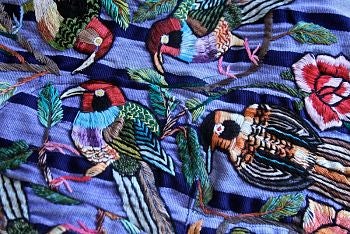
Colorful birds adorn a traditional huipil. Credit: RNuwer
Guatemala鈥檚 highlands are an explosion of color. Volcanoes shrouded in jungley green loom over craterous jade lakes. Nature鈥檚 palette doesn鈥檛 stop in the forest, either. Indigenous Mayans celebrate the landscape by incorporating festive environmental images onto their hand-woven blouses. Each town has its own distinct style, and colors range from neon pink to sunshine yellow. For birders in particular, the Maya fashion is a must-see: ladies often boast shirts covered in dozens of intricate, hand-woven birds.
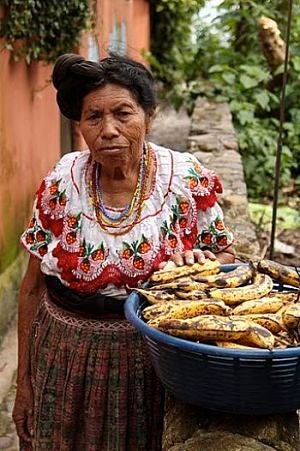 While many indigenous cultures around the world are shedding their native dress in favor of blue jeans and t-shirts, Guatemalan Maya still proudly sport their traditional clothing. 鈥淭heir weaving tradition dates back over two millennia,鈥� says Margot Blum Schevill, an independent anthropologist specializing in textiles and folk art. Maya women today still weave their own clothing using unique , and ancient sculptures show that early versions of these traditional devices date back to 700 A.D.
Mayan woman in an embroidered strawberry blouse.
Credit: RNuwer
A frenzy of birds, both fanciful and realistic, often adorns the blouses and 鈥攁 specially formatted square-shaped overlay鈥攐f Maya women. The cloth on these garments is usually woven with a variety of bird, animal, or flower designs. Each woman鈥檚 huipil is personalized, expressing not only her community鈥檚 culture but also her individuality and style. 鈥淭hese weavers are artists,鈥� Schevill says, 鈥淭hey love to do a little something special and you鈥檒l never find two huipiles exactly the same.鈥�
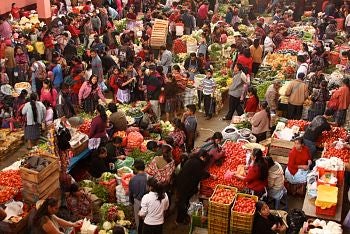
Maya fashions collide at the marketplace melting pot of Chichicastenango. Credit: RNuwer
Years ago, the embroidery was much more strictly defined according to community identity. By looking at a woman鈥檚 dress, Schevill says, you could tell exactly where she was from. But over time, things have changed, and women today wear the styles of other towns. For example, a double-headed eagle used to be associated with the town of Chichicastenango, a mountain hub known for its bustling weekly market. Called a kot in the Mayan language of Quiche, the two-headed raptor symbolized the act of looking both forward and backwards at the same time. Now the double-headed eagle can be seen in the textiles of other Guatemalan towns, too.
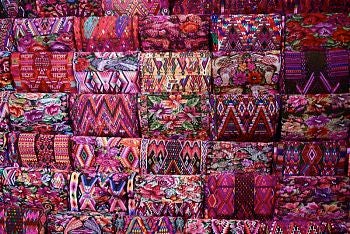
Can you spot five different bird-themed patterns on these rad textiles? Credit: RNuwer
While some birds like the double-headed eagle are mythical, Schevill says, others are based on common species that women may see in their courtyard while they weave. The Guatemalan national bird, the , often adorns all sorts of textiles. Its long, iridescent green tail feathers make it immediately recognizable. 鈥淚t鈥檚 one of the most beautiful birds,鈥� Schevill says, 鈥渁nd during ancient Mayan times its feathers were highly valued and traded.鈥� It鈥檚 said that Montezuma had a cloak made entirely of quetzal feathers. Today, birders unfortunately have a better chance of spotting a quetzal on a Maya blouse than in the wild. The endangered species is confined to the highland habitats of northeastern Guatemala and other Central American countries.
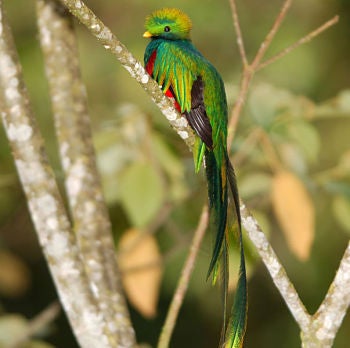
A rare quetzal. Credit: Flickr, Josegoingindie
Luckily for birders and nature-lovers visiting the country, Maya markets often have avian-themed huipiles and blouses readily available. Tourists can pick up their own bird-covered clothing items, showing their enthusiasm for feathered friends and supporting local Mayan women in the process. 鈥淣ature is their source,鈥� Schevill says of the indigenous artists, 鈥淭hey live with the flowers, they live with the birds. And their imagery comes from what is around them.鈥�
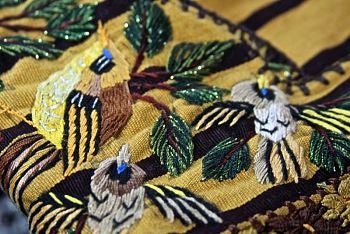
What species might this be? Credit: RNuwer
See also: , ,