

La p谩gina que intenta visitar s贸lo est谩 disponible en ingl茅s. 隆Disculpa!
The page you are about to visit is currently only available in English. Sorry!


In each issue of 探花精选, the editors review a mix of narrative nonfiction titles, as well as art books and children鈥檚 books about nature. For ease, we鈥檝e compiled the fantastic works we reviewed in 2012 in one place, and we鈥檝e added a few additional books we covered online.
BIRDS/BIRDING
By Thomas R. Dunlap
Oxford University Press, 256 pages, $34.95 ()
Thomas Dunlap traces the history of field guides from the days when the best birding technology was opera glasses to modern times. He makes clear in his new book that field guides and birding developed together, determining how each evolved over time. 鈥淚n text and pictures [the guides] said what was important, told how to practice the craft, even what to call the birds,鈥� Dunlap writes. 鈥淚n the field they served, as much as binoculars, as a member鈥檚 badge and an introduction.鈥濃��Frank Graham Jr.
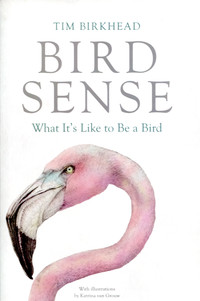 Bird Sense: What It's Like to Be a Bird
By Tim Birkhead
Walker & Company, 288 pages, $25 ()
Tim Birkhead鈥檚 new book is endlessly interesting. Nearly every page provides insights into how birds experience the world鈥攆rom how they navigate to what they see to their long-unappreciated sense of smell鈥攁nd reveals how much more we have to discover about these incredible creatures. A must-read for anyone who has ever wondered what it's like to be a bird.鈥�Alisa Opar
By Derek Lovitch
Princeton University Press, 208 pages, $19.95 ()
By paying attention to, among other things, radar maps, enthusiasts can take what Lovitch calls the 鈥渨hole bird and more鈥� approach: looking beyond the individual animals, focusing instead on their surroundings. The former avian researcher assumes readers have a basic knowledge of birding terminology and at least minimal skill. His language is easy to digest, making confusing groups like sparrows seem manageable to ID. Becoming a better birder requires practice, but Lovitch provides the tools for those willing to put in the work to be the best they can be.鈥�Michele Berger
By Thor Hanson
Basic Books, 352 pages, $15.99 ()
Beginning with the evolution of birds, Hanson, a biologist, explains competing theories with ease, and unfolds the human fascination with feathers in terms of science, commerce, tools, folklore, art, and aerodynamics with panache. Anecdotes infuse the fascinating survey.鈥�Amber Williams
By Boria Sax
Duckworth Overlook, 208 pages, $22 ()
In 1554, after the death of England鈥檚 Lady Jane Grey鈥攅xecuted for treason when Mary I, or 鈥淏loody Mary,鈥� assumed the throne鈥攔avens at the Tower of London supposedly pecked the eyes out of her severed head. In City of Ravens, historian Boria Sax debunks this and other deliciously macabre legends, suggesting that the birds were actually first brought to the Tower in the 19th century as pets, not corpse eaters. Ever since, the black birds have resided at the Tower. The author delves into the true history and cultural importance of these massive corvids.鈥�Anna Sanders
By John Yow
University of North Carolina Press, 256 pages, $26 ()
John Yow鈥檚 The Armchair Birder Goes Coastal masquerades as a glorified guidebook, with 28 bird profiles spanning five seasons. Yet through enchanting descriptions and personal anecdotes, Yow makes characters鈥攖he villainous ruddy turnstone, the 鈥渄runken鈥� reddish egret鈥攐ut of his subjects, carefully highlighting each species鈥� subtleties.鈥�Michele Berger
NATURE/ADVENTURE
By Richard Fortey
Alfred A. Knopf, 332 pages, $28.95 ()
What do you do at a horseshoe crab orgy, when the ancient creatures throng beaches to reproduce in the spring? Richard Fortey takes notes. And so begins this beautiful book about horseshoe crabs and other species that have endured mass extinctions, sea-level changes, ice ages, and other hurdles to survive to the present day.鈥�Justin Nobel
By Stefan Bechtel
Beacon Press, 254 pages, $26.95 ()
Personal salvation through taxidermy鈥攖his was the bizarre philosophy that carried a God-fearing, gun-toting Midwestern farm boy named William Temple Hornaday into the most colorful career in American conservation history. Shoot, stuff, and exhibit the mortal remains of slaughtered game for the public鈥檚 admiration and education. Hornaday shot the first crocodile recorded in Florida. He killed a tiger in India, and in Borneo ended up with 43 orangutans鈥攕hot, skinned, and suitably resurrected Later in life a passion drove him to save the remnants of American wildlife. Hornaday鈥檚 blemishes were mostly a reflection of his violent time, his undoubted virtues the product of a conflicted but unique man.鈥�Frank Graham Jr.
By Tim Flannery
Atlantic Monthly Press, 256 pages, $25 ()
Remote lands populated by cannibalistic natives and poisonous snakes set the stage for biologist Tim Flannery鈥檚 latest book, Among the Islands. The renowned author delves into his 1980s and 鈥�90s expeditions to catalog unique, elusive species, like a red-gray tree-climbing mouse and a monkey-faced bat. He bounces from the Solomon Islands to Fiji to Bismarck鈥檚 Isles, falling into a sinkhole while trying to set a mist net and trudging through thigh-deep guano to get a closer look at an insect-eating bat. Part travel diary and part field notebook, Among the Islands is a rollicking good adventure-science read鈥攕omething like what you鈥檇 get if Charles Darwin starred in an Indiana Jones flick.鈥�Susan Cosier
By Jim Sterba
Crown Publishers, 368 pages, $26 ()
Jim Sterba explores how, ironically, many Americans are living closer to nature than ever before鈥攁nd how ill-equipped we are to deal with it. After centuries of uncontrolled hunting and clear-cutting devastated ecosystems, the environmental movement inspired people to try to restore some kind of natural balance. While conservationists have unquestionably made incredible strides, Sterba argues that, close to home, we鈥檝e overcompensated, paving the way for wild creatures to live in our lushly landscaped environs鈥攚ith plenty of food and protection鈥攂ut not in harmony.鈥�Catherine Griffin
By Terry Tempest Williams
Sarah Crichton Books/Farrar, Straus and Giroux, 208 pages, $23 ()
In When Women Were Birds, Williams once again weaves together personal history and the natural world through her eloquent prose. Over 54 taut chapters鈥攈er mother was 54 when she died, as was Williams when she wrote this book鈥擶illiams takes the reader on a remarkable journey. She traces her life, from her Mormon upbringing through her days as a science teacher in a religious school and on to her inspiring involvement in national policy and international human rights.鈥�Susan Cosier
By Rick Bass
Houghton Mifflin Harcourt, 288 pages, $25 ()
The story of the black rhinoceros is also a story of the desert, and Bass鈥檚 writing submerges readers in 鈥渢he oldest unchanged landscape on earth,鈥� a blistering horizon of basalt and heat. Through his journey Bass pulls apart the layered relationship between rhinoceros and desert, land and history, past and future. 鈥淏ig animals, with the broad strokes of their movements and lives, can show us the world,鈥� he writes, 鈥渁nd with those broad strokes lead us further into imagination.鈥濃��Justine E. Hausheer
By Callum Roberts
Viking, 405 pages, $30 ()
Despite its beauty and wonder, disaster looms beneath the ocean鈥檚 surface. Year after year, fish populations decline and the oceans become more polluted. In recent decades we鈥檝e treated it as a dumping ground and heedlessly exploited its resources. Callum Roberts鈥檚 new book is a call to action. A marine scientist and author, he describes in vivid detail how the ocean鈥檚 stores are rapidly declining and how its very makeup is changing.鈥�Catherine Griffin
By Douglas W. Smith and Gary Ferguson
Lyons Press, 256 pages, $16.95 ()
Between harrowing helicopter rides, firing dart guns, and handling gray wolves up close, working on the recovery of Yellowstone's top predator isn't for the faint of heart. Douglas Smith, leader of the Yellowstone Gray Wolf Restoration Project, teams up with award-winning nature writer Gary Ferguson offer readers a compelling, intimate look at restoring wolves to Yellowstone.鈥�Alisa Opar
By Kelly Enright
University of Virginia Press, 200 pages, $29.95 ()
Enright investigates explorers, writers, and scientists who shared their enchantment with the jungle through books, essays, and film. From the poetic 鈥渨ild hot continents鈥� John Muir explored to the 鈥渦nbelievably rich flora鈥� ethnobotanist Richard Evans Schultes saw in the Amazon, Enright delves into the origins and evolution of American views of the jungle and, later, the rainforest. 鈥溾��Anna Sanders
By Bernd Heinrich
Houghton Miffl in Harcourt, 256 pages, $25 ()
When a friend with a severe illness expresses to Bernd Heinrich his desire for a green burial 鈥渂ecause human burial is today an alien approach to death,鈥� it compels the renowned biologist and author to contemplate how the natural world deals with the end of life. The result is a moving examination of what Heinrich calls 鈥渁nimal undertaking.鈥� In Life Everlasting he delves into happenings largely invisible to us: carrion beetles burying mice; the astonishing transformation of marine plankton (microscopic plants) into chalk; the persistence of ravens in chipping meat off of a frozen carcass mid-winter and their stealthy exploits to hide their hard-earned meal.鈥�Alisa Opar
By Daniel Chamovitz
Scientific American/Farrar, Straus and Giroux, 192 pages, $23 ()
Judiciously manipulating similes with dashes of anthropomorphism, Chamovitz introduces each of the vital human senses (all except taste) and explains its meaning for humans as contrasted with its function in plants. There are no noses or eyes as such in the plant world, but there are organs and responses that mimic our physiology. The author recounts, for instance, how willows, attacked by caterpillars, send airborne pheromones to neighboring willows. Warned by these gaseous signals (or 鈥渟mells鈥�) of a nearby infestation, the neighbors begin manufacturing increased levels of toxic chemicals to render their leaves unpalatable to the caterpillars.鈥�Frank Graham Jr.
By Gilbert Waldbauer
University of California Press, 240 pages, $27.95 ()
For the 900,000 known insect species, about 75 percent of the known animal species on earth, staying alive by any means necessary requires a variety of defenses. In his new book, Gilbert Waldbauer, a professor emeritus of entomology at the University of Illinois, uses a plethora of studies from scores of researchers to show that whether they walk, swim, or fl y, insects are unparalleled in their ability to eat plants and other insects, parasitize mammals and transmit disease (thus helping to keep populations in check), and function as a sanitation corps by recycling and redistributing nutrients from dung and dead plants and animals.鈥�Susan Cosier
By Jim Robbins
Spiegel & Grau, 240 pages, $25 ()
鈥淚magine a world without trees,鈥� writes journalist Jim Robbins. It鈥檚 nearly impossible after reading The Man Who Planted Trees, in which Robbins weaves science and spirituality as he explores the bounty these plants offer the planet. They feed oceans, clean air, release anti-cancer compounds, and affect the water cycle. Robbins also tells the story of David Milarch, who, after nearly dying from kidney and liver failure in 1987, has dedicated himself to saving trees.鈥�Daisy Yuhas
By Nicholas P. Money
Oxford University Press, 201 pages, $24.95 ()
Blood-foot, stinkhorn, and the deadly webcaps are just three oozing, putrid, or poisonous species among the wide array of fungi described in botanist Nicholas P. Money鈥檚 vivid new book, Mushroom. Money delves into the science behind their spore-spewing and hallucinogenic properties, exploring their place in nature and culture. The book is littered with references to individuals who have made their mark in mycology, clarifying the seemingly mystical properties of fungi, the least studied and least understood kingdom of life.鈥�Susan Cosier
By Dame Daphne Sheldrick
Farrar, Straus and Giroux, 352 pages, $27 ()
In Love, Life, and Elephants, her touching new memoir, Daphne Sheldrick gracefully chronicles decades of living with and working to conserve the creatures of Kenya鈥檚 Tsavo National Park. While in her mid-twenties, she falls for (and eventually marries) the park鈥檚 wildlife warden. Together the two also fall for creatures facing hard fates. Most of all, Sheldrick adores Tsavo's elephants鈥攁 species whose population in Kenya plummeted in a mere 16 years from 167,000 to 16,000 due to the ivory trade.鈥�Michele Berger
By Peter Allison
Lyons Press, 200 pages, $16.95 ()
Peter Allison recounts his 18-month journey across South America, over glaciers and through jungles, in search of another wild cat, the jaguar. This is no Eat, Pray, Love鈥搒tyle memoir. Allison embraces the oft-omitted travel truth that sometimes expectations exceed reality, seeing this as all the more reason to laugh at life鈥檚 surprises.鈥�Daisy Yuhas
By Richard Conniff
W.W. Norton & Company, 464 pages, $26.95 ()
Award-winning writer Richard Conniff charts a course through an era of intense discovery (nearly 200 years, starting in 1735), honoring the naturalists and scientists who achieved 鈥渟omething like immortality鈥� (Charles Darwin and John James 探花精选, for example), as well as the lesser-known (or unfairly credited) ones. In pursuit of new species and theories, they experienced great joys as well as great losses鈥攐f fame (to competitors), specimens (in shipwrecks), or life (to disease). In the end these adventurers helped shape the course of history, changing the way we understand species, their origins, and how humans fit into the picture.鈥�Julie Leibach
By Diana Reiss
Houghton Miffl in Harcourt, 288 pages, $27 ()
Reiss鈥檚 research with mirrors has demonstrated that dolphins, like great apes, have the capacity for self-recognition and, potentially, empathy. This book brings readers into her laboratory. She walks through her work from its begnings, sharing unforgettable moments like a dolphin's sly deception or beautiful bubble play. What Reiss reveals about dolphins and humans is often brilliant, at times brutal,