
La p谩gina que intenta visitar s贸lo est谩 disponible en ingl茅s. 隆Disculpa!
The page you are about to visit is currently only available in English. Sorry!

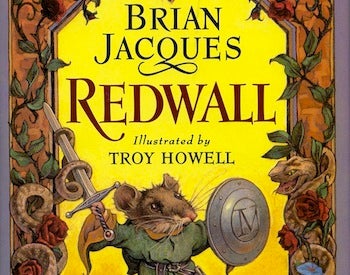
, author of the well-known , passed away over the weekend. I was saddened by the news, and stirred, because this series is one I can lay claim to. For some of us born a year or two before the Harry Potter generation, Redwall was our literary magic, though it involved no wizardry but its richly imagined setting: the mythical Mossflower forest and countryside. Unless you call societies of small talking mammals, waging epic battles of good and evil, magic? Then, yes. Part Arthurian legend, part Watership Down, for a young boy fascinated by his backyard, Redwall added up. Mice, rats, and squirrels were the essential characters in both worlds, along with like shrikes, hawks, and owls.
Anthropomorphism is a complicated subject: Now I feel that, at least in part, animals ought to exist on their own terms, in their own world, even on the page. But for me, Redwall鈥檚 animals did have a degree of ecological reality about them, though they live in an abbey. Whether I carried this into the series or it was there, truly, I'm not sure. In any case, though the series may be filled with our morality tales, and may villainously stereotype 鈥渧ermin鈥濃�攔ats, weasels, and snakes鈥擩acques鈥檚 books furthered in me a fascination and respect for all the little live things, to borrow a phrase from Wallace Stegner.
I remember reading in bed, and then imagining the mice and rats scurrying through the understory, in their leaf litter tunnels, in the California night. Sometimes I would hear them, scratching outside鈥攐r even in the walls. They weren鈥檛 carrying tiny shields and swords, but they were talking to each other鈥攍eaving scents, and squeaks, rarely audible. They were living and dying, too, in a battle to reproduce. When the great-horned or Western screech owl called out in the pines behind my room, and the rest of the night fell quiet, it was all the more mysterious, and real, to me, because it had existed in Redwall as well.
If we don鈥檛 read and care about animals when we鈥檙e little, when will we ever? My hunch is that many bird- and nature-enthusiasts born in the 80s encountered Redwall on their way to adulthood. Others encounter other series. Jacques himself was inspired by The Wind in the Willows. Thanks, then, to him and many authors for sparking so many imaginations, some of which now work鈥攐r will鈥攖o make sure small bird and mammal societies thrive.
And on that note, stay tuned for Senior Editor here on The Perch.